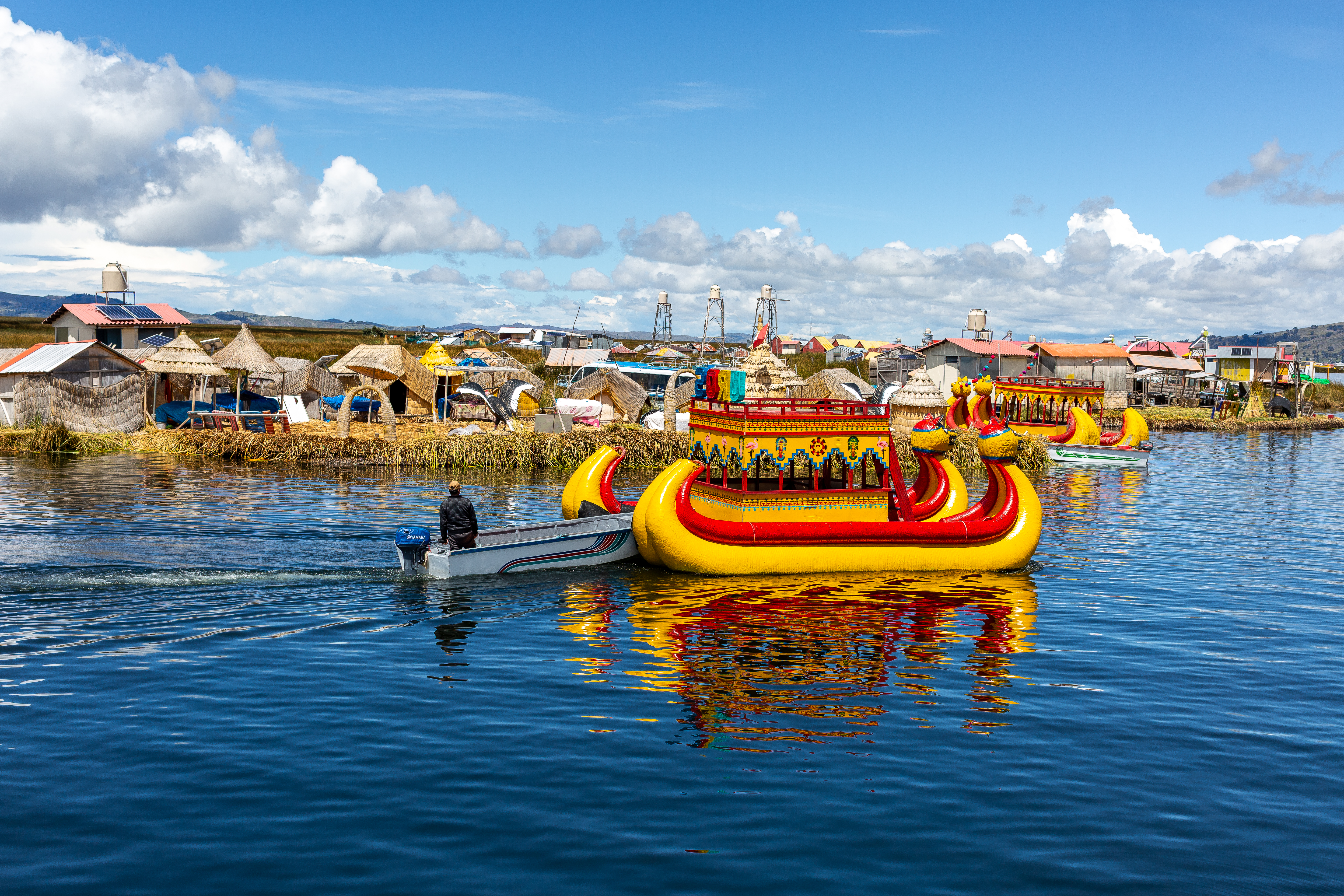
Lake Titicaca was a destination I felt we had to check out. It is the largest lake in South America and holds the title of the world’s highest navigable lake at 3812 metres. Also it is situated on a fairly convenient route into Bolivia. However before we talk about the lake we have to get there.

To get to Lake Titicaca we chose to treat ourselves to The Peru Rail Expedition Train. I knew it was the right decision when a small band was paying music on the boarding platform when we arrived at the train station in Cusco.
As we settled in at our table for the 10.5 hour journey I knew I was going to enjoy this.
We enjoyed a couple of traditional dance demonstrations. Very entertaining, especially when you factor in the confined space and the moving train.
Approximately half way through the journey we stopped for a break to stretch our legs and enjoy the epic scenery.
The service was exceptional and we enjoyed a gourmet lunch after our brief stop.
The live music was fantastic.
The drummer truly seemed to be enjoying himself. My dad was a musician and I found myself transported to a time when I could hear him playing. It was a very special part of the journey for me.
The bartender was an absolute professional. He prepared a couple of delicious Expresso Martinis for us.
He also did a demonstration on how to make a Pisco Sour. With his expert guidance I can safety say I prepared an excellent drink.
My Macarena dance rendition wasn’t quite as good, but I had a lot of fun.
The extra cost of the train trip was worth every penny. A memorable trip through a beautiful area in a comfortable setting. Life is good.

We decided to spend three nights at Lake Titicaca. Two on the Peru side and one on the Bolivian side of the lake.

The City of Puno is mainly known as the gateway to Lake Titicaca. The city itself is not terribly spectacular, but we did manage to find some decent restaurants and bars to visit.
Lake Titicaca is quite impressive. One of the things that struck me continuously at these high elevations was the blueness of the sky. It was simply spectacular.
We did a boat tour out to see the Uros community. Around 3000 people live a traditional life style on these floating islands that they build.
Each family has their own island and must constantly work to replace and reinforce the reeds on which their homes float. The matriarch of this family gave us a demonstration of what each island was floating on.
The harvesting of fresh reeds is a constant job.
Their main source of income is tourism which allows them to purchase the food they cannot produce from the community ties around the lake. Each family island had either a tour boat or a model family set up you could visit.
This 5 year old boy was learning the ropes from his 14 year old bother. They were transporting us between islands. No adults present.
This guy was an absolute charmer and he was very proud of his football shoes.
It was neat to see the combination of traditional building and modern conveniences like solar water heaters and water tower plumbing.
We enjoyed our beautiful day on Lake Titicaca.
We decided not to take advantage of this rooftop restaurant overlooking the lake in Puno. Can you figure out what made us nervous?
The most entertaining thing I saw on the Bolivian side of the lake was the Bolivian Navy base. As Bolivia is a land locked country I never imagined they would have a navy. However there is about 190km of border between Bolivia and Peru on the lake.
Ceviche is very common in the region and is made with trout from the lake. There were a lot of fish farms along the shoreline.
After finishing our time at Lake Titicaca we crammed into a bus for the 3.5 hour bus ride to La Paz.
I was pleased when we had to disembark from the bus for a short ferry crossing of the lake. The barge the bus went across on did not inspire a lot of confidence.

Our trip from Peru to Bolivia was entertaining and flawless. The stop at Lake Titicaca was a nice way of breaking up the trip. Now on to La Paz and the famous Uyuni Salt Flats. Stay tuned.


Comments

Leave a Reply

Discover more from Peter & Karen Pecksen

Subscribe now to keep reading and get access to the full archive.

Continue reading